
Retro Roots & Suburban Boots
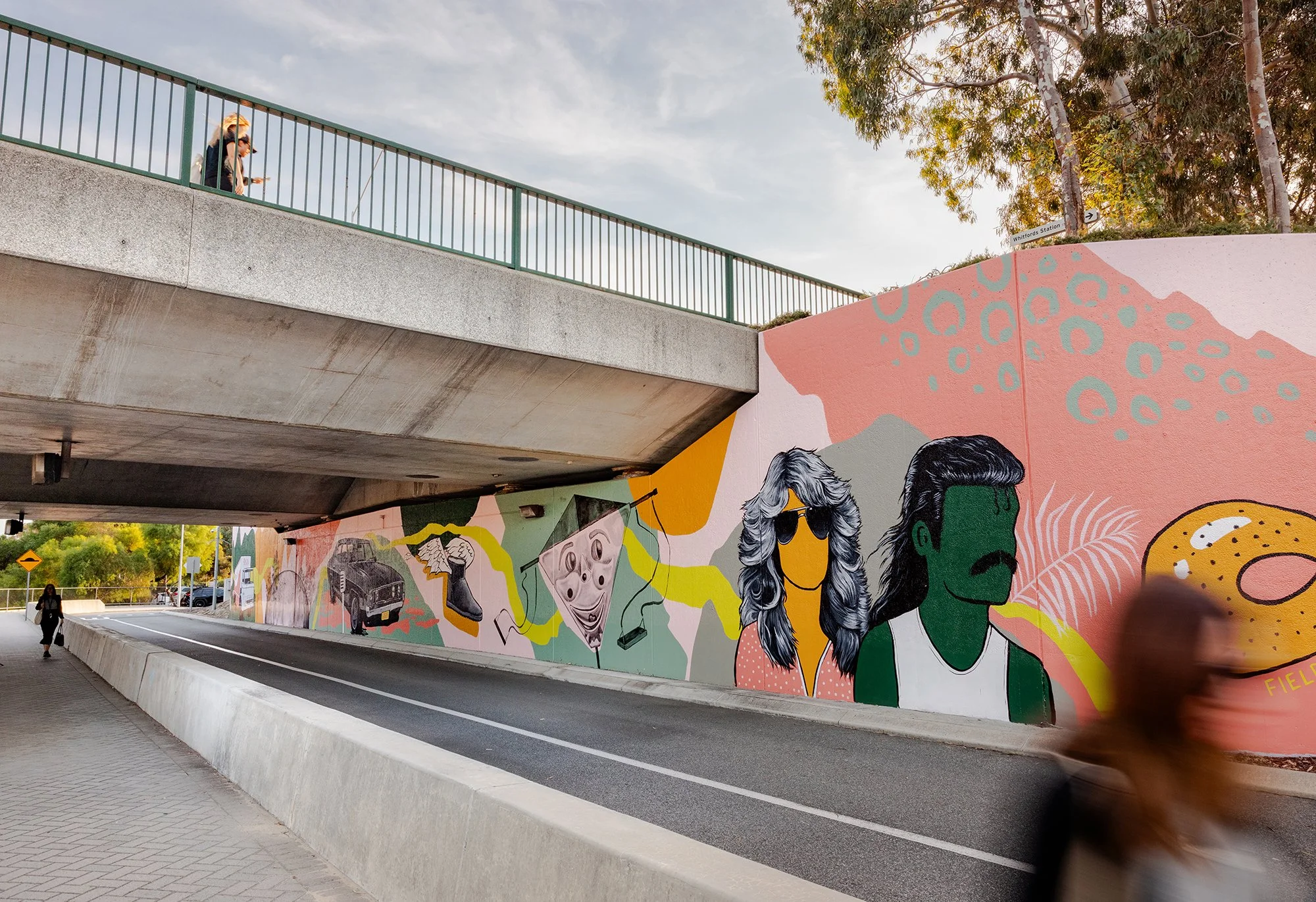
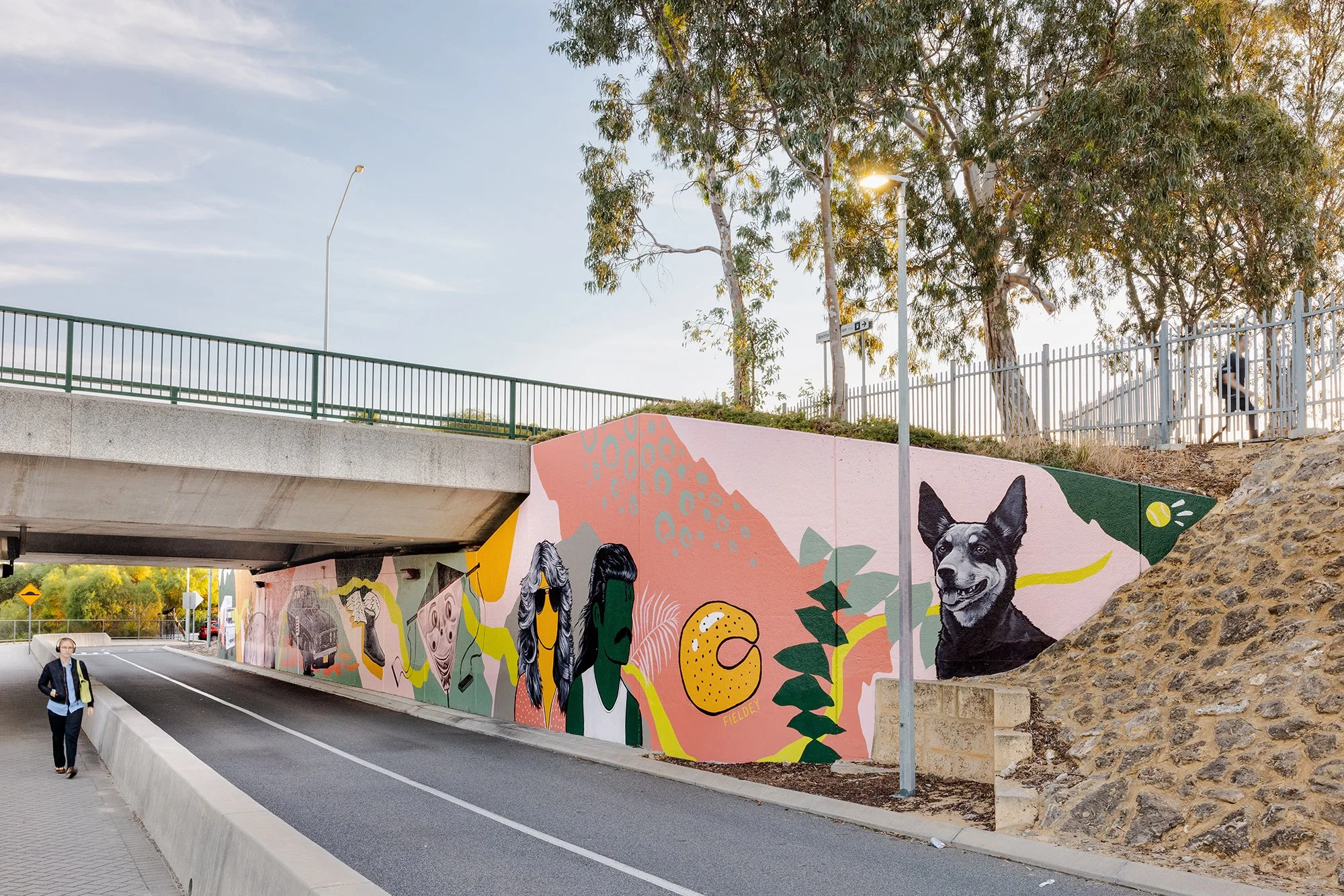
Fieldey’s newest mural, Retro Roots & Suburban Boots, is a love letter to the working-class charm of Perth’s northern suburbs from the 1970s through to the 1990s. With Retro Roots & Suburban Boots, Fieldey offers a vibrant, layered response to place—celebrating the working-class identity and rich suburban culture of Perth’s northern suburbs from the 1970s through to the 1990s. Situated in Craigie, where the artist first settled after moving to Perth, the mural interweaves personal narrative with community-sourced memories to tell a collective story of time and belonging.
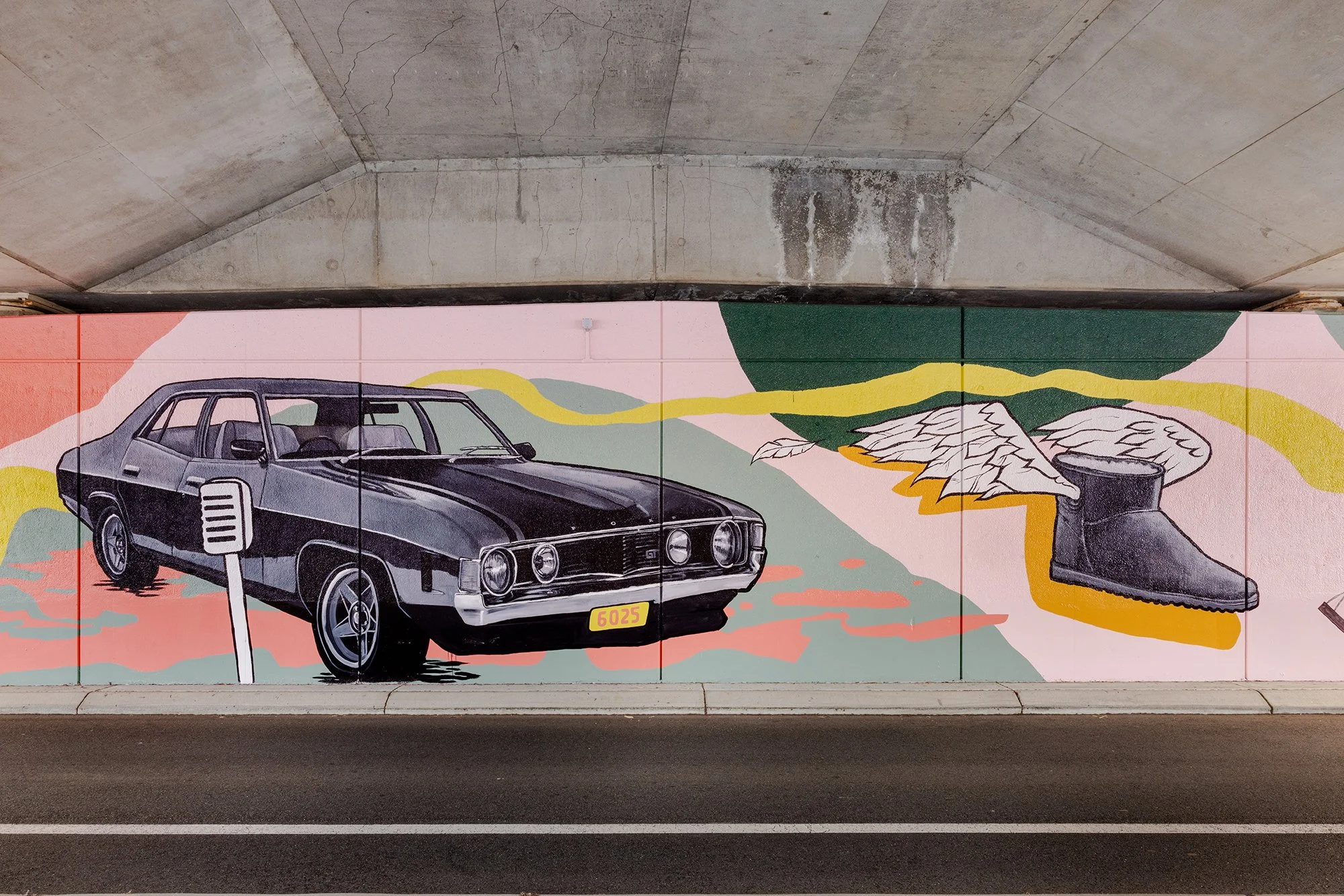
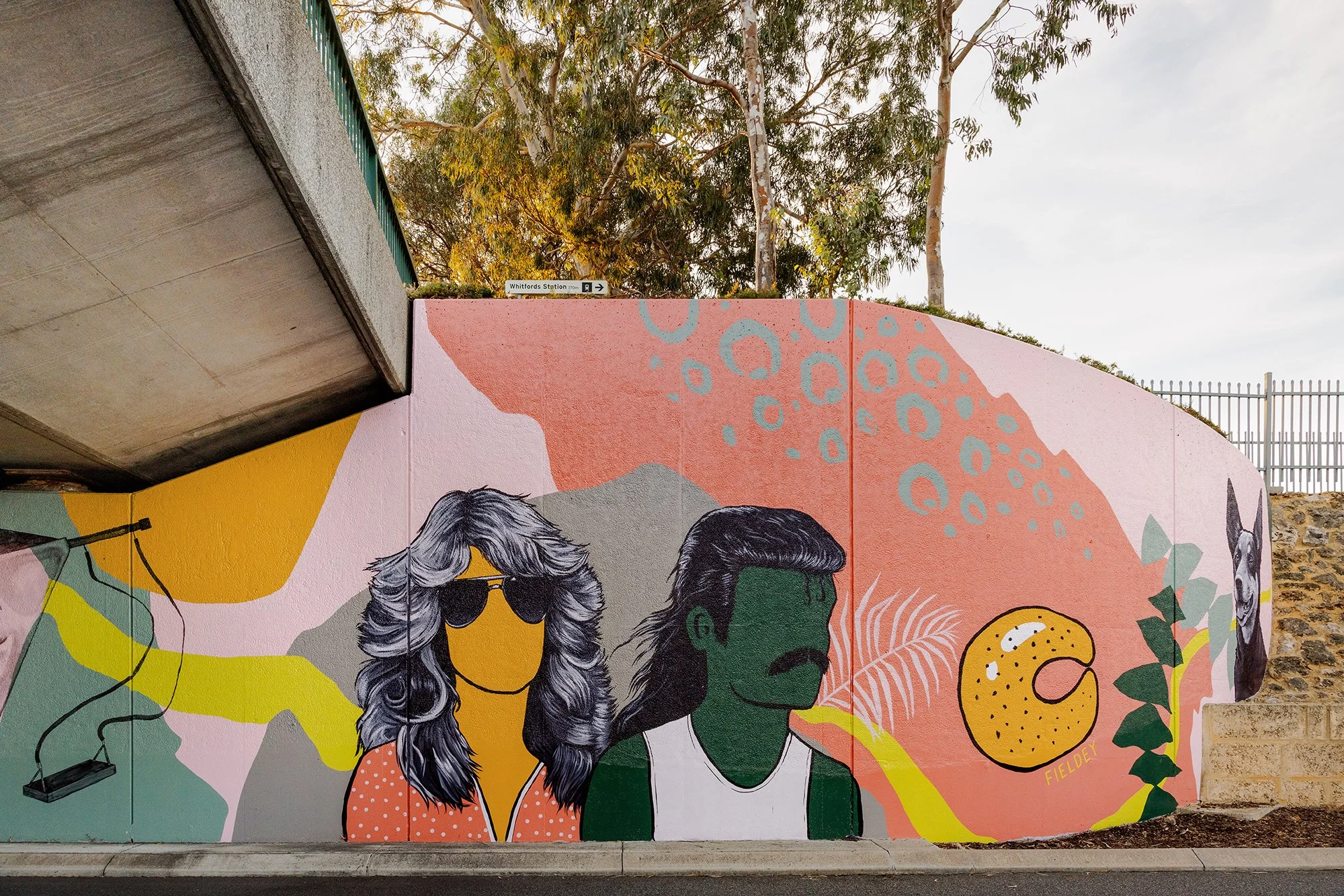
The design centres on a retro-themed drive-in movie scene, where a couple (complete with resplendent mullet and Farrah Fawcett waves) enjoy a date night with their beloved Kelpie and choc-milk in tow. It’s a loving nod to classic car culture, iconic hairstyles, and the all-terrain status of Ugg boots—details drawn directly from Fieldey's own experience of life in Craigie.
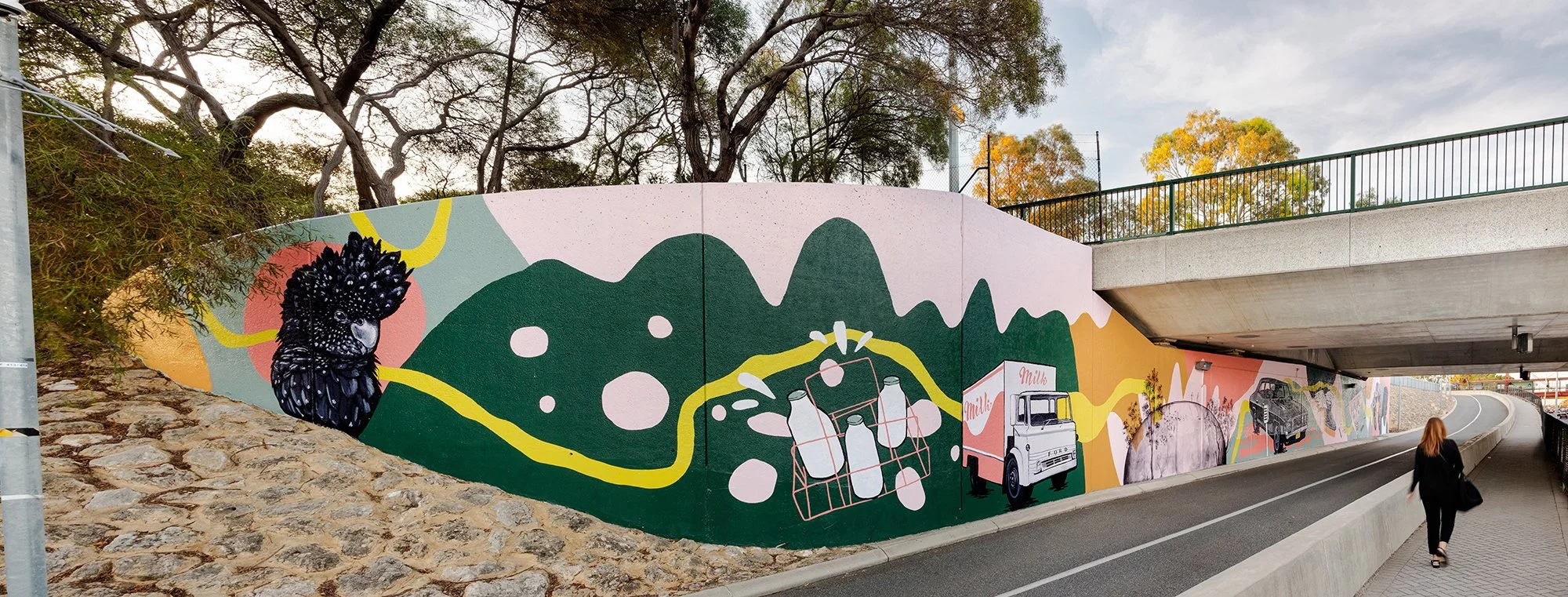
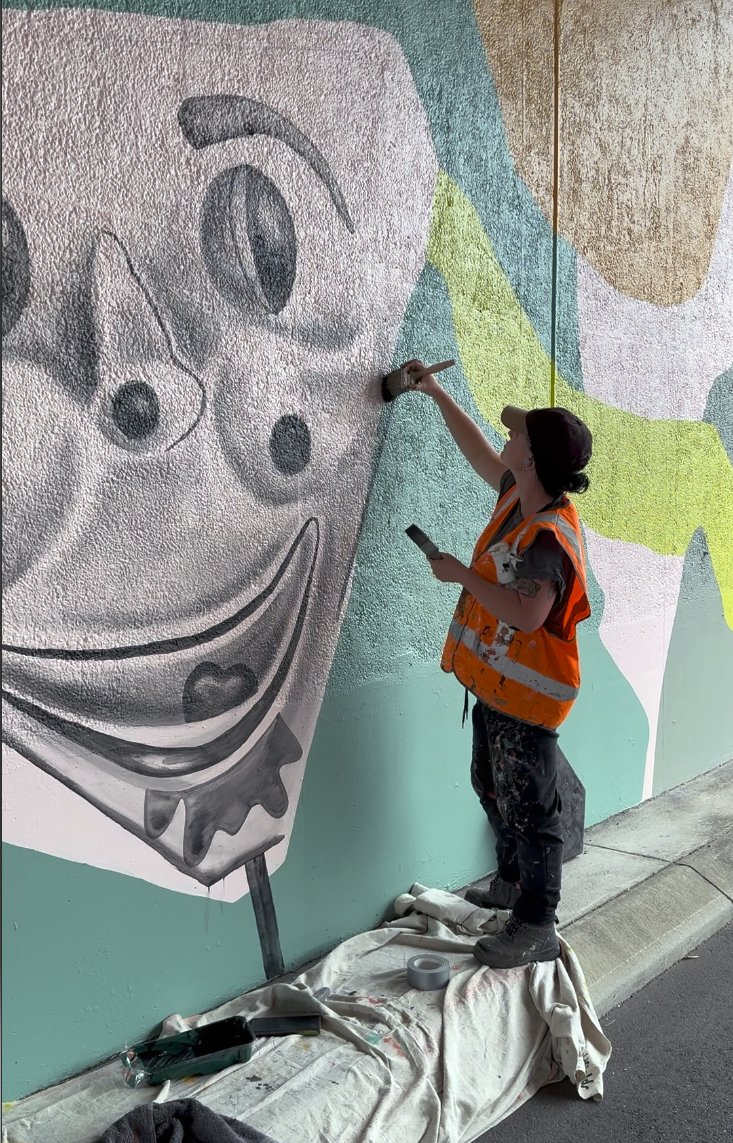
The creative process behind the mural was equally rooted in community connection. Fieldey reached out to residents via local Facebook groups, inviting them to share their memories of growing up in the area. The nostalgic and often hilarious responses inspired many of the mural’s key features: home milk deliveries, horse-shoe rolls, the Binishell dome, black cockatoos and banksias, and even the infamous creepy clown swing. These stories were lovingly woven into the composition, ensuring the final piece feels both personal and collective.
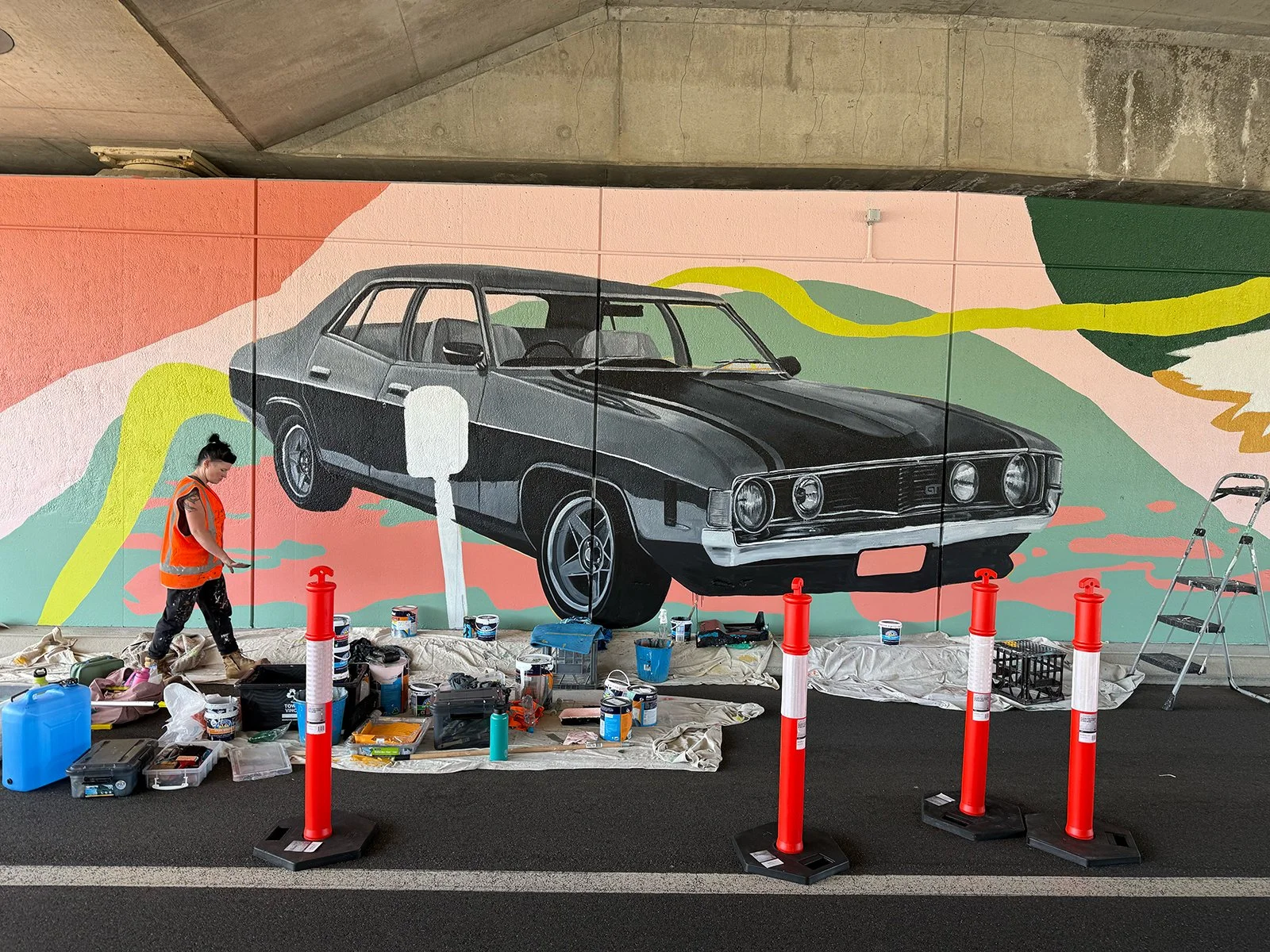
A team of three artists joined Fieldey to bring the mural to life over six days of painting. Together, they transformed the site into a flowing visual narrative that embraces the curve of the wall and is visible from both the freeway and nearby carpark. A dynamic green line snakes through the composition, connecting each element and referencing both physical travel and the deeper idea of intergenerational connection. The artwork’s bright, retro-inspired palette was developed from the Main Roads colour schemes for Hepburn to Whitfords and Whitfords to Ocean Reef, with a splash of bold pink added to modernise and unify the work.
True to its name, Retro Roots & Suburban Boots is more than a nostalgic throwback—it’s a reflection on how much has changed, and how much remains. Classic cars still cruise the streets, mullets have made their comeback, and Ugg boots are as essential as ever. The mural captures that sense of enduring identity, playfulness and local pride with boldness, humour and heart.
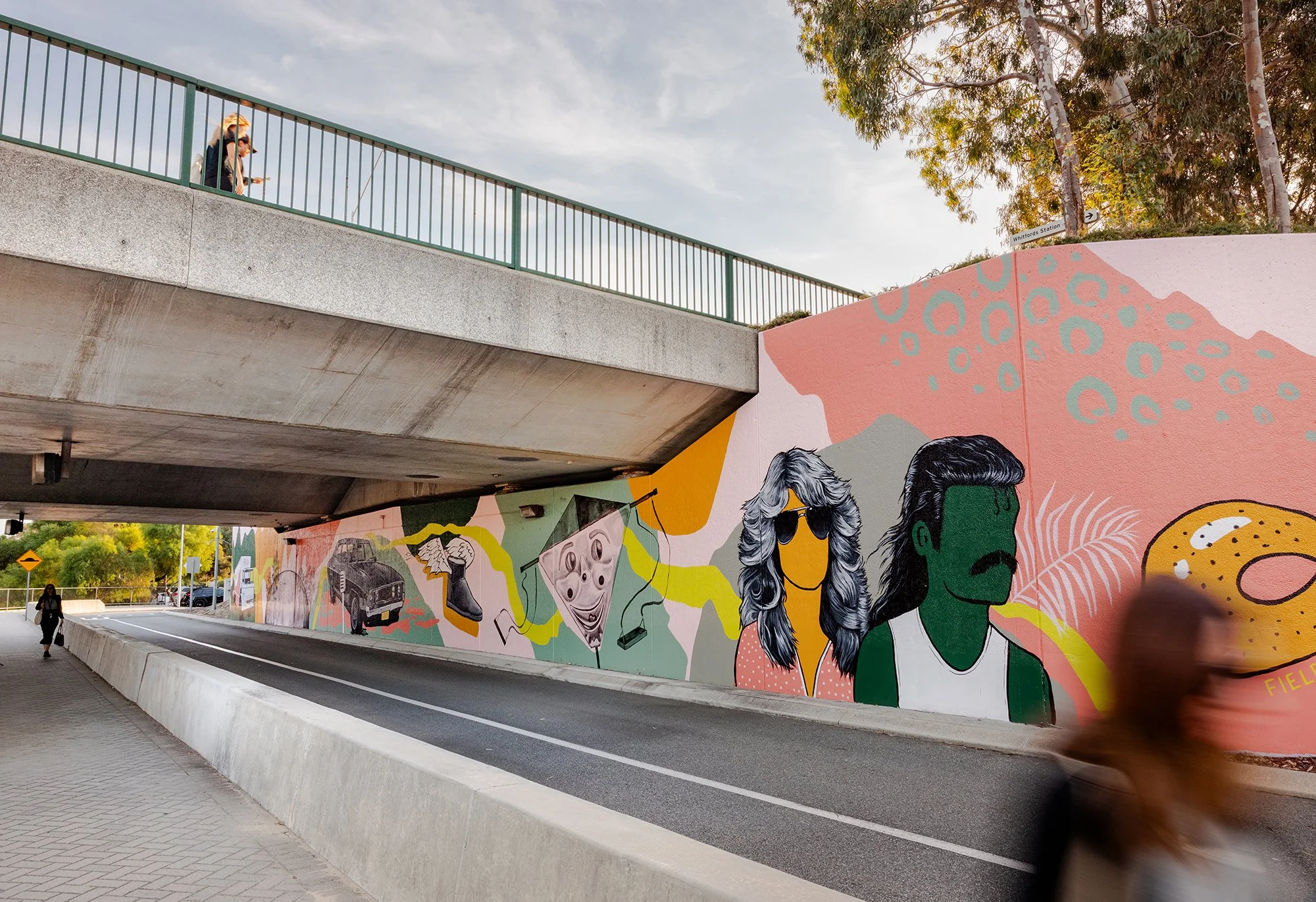
Retro Roots & Suburban Boots is Fieldey’s newest mural, a nostalgic love letter to the working-class charm of Perth’s northern suburbs from the 1970s through the 1990s. Painted in Craigie, where Fieldey first landed after moving to Perth, the artwork blends personal memories with stories gathered from the local community to create a lively portrait of suburban life.
At the centre of the design is a retro drive-in movie scene: a couple on date night, complete with a glorious mullet, Farrah Fawcett waves, a loyal Kelpie and a choc-milk on hand. It is a playful nod to classic car culture, iconic hairstyles and the everyday comforts like trusty Ugg boots that defined life in Craigie during that era.
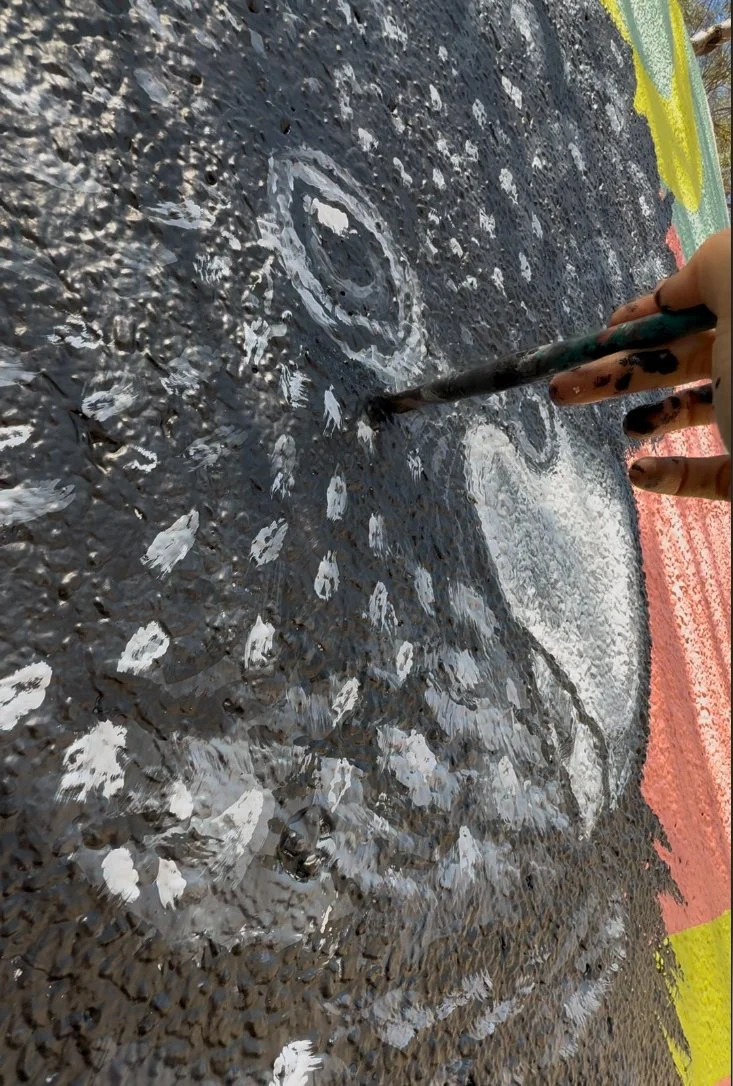
The mural’s details were shaped by the community itself. Fieldey reached out to residents through local Facebook groups, inviting them to share their favourite stories from growing up in the area. Their memories, funny, heartfelt and wonderfully specific, inspired many of the mural’s elements, including home milk deliveries, horse-shoe rolls, the Binishell dome, black cockatoos and banksias, and even the infamous creepy clown swing. These slices of local history were woven throughout the composition so the artwork feels both deeply personal and unmistakably Craigie.
The mural was brought to life by a team of three artists over six days of painting. Together, they transformed the curved wall into a flowing visual narrative visible from both the freeway and the nearby carpark. A sweeping green line travels through the artwork, linking each vignette and symbolising both physical movement and intergenerational connection. The retro-inspired palette draws from Main Roads colour schemes for Hepburn to Whitfords and Whitfords to Ocean Reef, with an added hit of bold pink to freshen and unify the design.
True to its name, Retro Roots & Suburban Boots is not just a nostalgic throwback. It is a celebration of what gives the northern suburbs their character. Some things have changed, but many have not. Classic cars still roam, mullets are back and Ugg boots remain essential. The mural captures that enduring sense of place with humour, colour and heart.
250m-Long Mural for Spearwood Ave, Yangebup
I was awarded a commission through an Expression of Interest (EOI) process to transform a 250-meter-long noise wall on Spearwood Avenue. The wall, which had originally been painted in a drab green colour, had long been an eyesore for the local residents. Positioned along a busy road where cars travel at speeds of up to 70 km/h, the wall had limited visibility to pedestrians, and the challenge was to create an engaging design that would be seen predominantly from passing vehicles.
The brief called for a simple, bright, and fun design that would uplift the area while also reflecting the unique characteristics of the suburb. To guide the design process, I held a community consultation workshop, where local residents shared their thoughts on what made Spearwood special. The feedback was invaluable, with many participants pointing out that the wall’s primary audience would be drivers rather than pedestrians, which meant that intricate details would not be visible. As a result, the design needed to focus on large, semi-abstract shapes that would be effective from a distance.
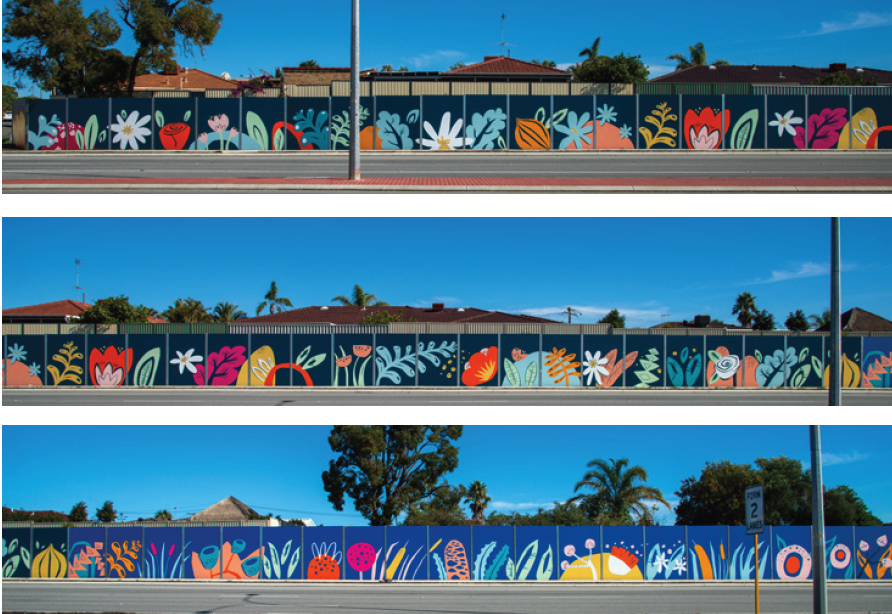
The mural itself is divided into three sections, each representing a different aspect of the suburb’s ecosystems. The leftmost section depicts the inland market gardens, which are a prominent feature of the area. This part of the mural features stylised representations of flowers and onions, reflecting the agricultural history of Spearwood. The middle section transitions into the wetlands, with abstract shapes representing plants such as banksia, bulrushes, gum trees, and tuart flowers. Finally, the mural moves into the coastal zone, showcasing flora such as pigface, Geraldton wax flowers, dune mosses, cushion bush, and seaweed—plants that are native to the region and reflect the suburb’s connection to the sea.
This thoughtful progression from inland market gardens to wetlands and then to the coast creates a visual narrative that mirrors the natural environment surrounding Spearwood. The design's bold and vibrant colours, combined with its large-scale semi-abstract shapes, ensure that the mural stands out from the passing traffic and provides a visual experience for drivers.
The project was completed over the course of nine days, with myself and a team of skilled assistants working to bring the design to life. The outcome is a mural that not only brightens the once-drab wall but also celebrates the local flora and fauna, giving the residents of Spearwood a meaningful and colourful representation of their community's unique ecosystems.
This project highlights the power of public art in transforming urban spaces and fostering a sense of pride and connection within the community. It was a rewarding experience to work closely with the residents and contribute to the aesthetic improvement of Spearwood Avenue.



I was awarded a commission through an Expression of Interest (EOI) process to transform a 250-meter-long noise wall on Spearwood Avenue. The wall, which had originally been painted in a drab green colour, had long been an eyesore for the local residents. Positioned along a busy road where cars travel at speeds of up to 70 km/h, the wall had limited visibility to pedestrians, and the challenge was to create an engaging design that would be seen predominantly from passing vehicles.
The brief called for a simple, bright, and fun design that would uplift the area while also reflecting the unique characteristics of the suburb. To guide the design process, I held a community consultation workshop, where local residents shared their thoughts on what made Spearwood special. The feedback was invaluable, with many participants pointing out that the wall’s primary audience would be drivers rather than pedestrians, which meant that intricate details would not be visible. As a result, the design needed to focus on large, semi-abstract shapes that would be effective from a distance.
The mural itself is divided into three sections, each representing a different aspect of the suburb’s ecosystems. The leftmost section depicts the inland market gardens, which are a prominent feature of the area. This part of the mural features stylised representations of flowers and onions, reflecting the agricultural history of Spearwood. The middle section transitions into the wetlands, with abstract shapes representing plants such as banksia, bulrushes, gum trees, and tuart flowers. Finally, the mural moves into the coastal zone, showcasing flora such as pigface, Geraldton wax flowers, dune mosses, cushion bush, and seaweed—plants that are native to the region and reflect the suburb’s connection to the sea.
This thoughtful progression from inland market gardens to wetlands and then to the coast creates a visual narrative that mirrors the natural environment surrounding Spearwood. The design's bold and vibrant colours, combined with its large-scale semi-abstract shapes, ensure that the mural stands out from the passing traffic and provides a visual experience for drivers.
The project was completed over the course of nine days, with myself and a team of skilled assistants working to bring the design to life. The outcome is a mural that not only brightens the once-drab wall but also celebrates the local flora and fauna, giving the residents of Spearwood a meaningful and colourful representation of their community's unique ecosystems.
This project highlights the power of public art in transforming urban spaces and fostering a sense of pride and connection within the community. It was a rewarding experience to work closely with the residents and contribute to the aesthetic improvement of Spearwood Avenue.